They walked into the studio in the late 1980s with a sound that did not mimic anyone else in R&B at the time. Tony! Toni! Toné! were three musicians from Oakland who played their own instruments, wrote their own songs, and produced their own records at a time when R&B was dominated by synthesizers, drum machines, and producers who treated vocalists as interchangeable parts. Raphael Saadiq, his brother Dwayne Wiggins, and their cousin Timothy Christian formed a band that brought the funk back to Black radio, one live bassline at a time, without apology or compromise.
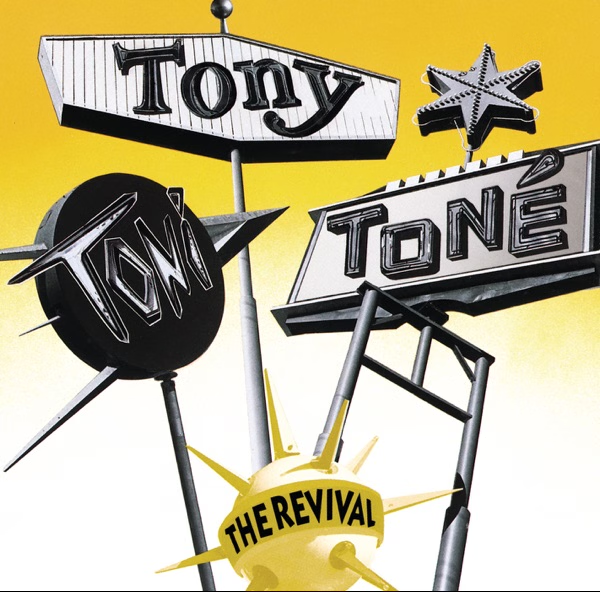
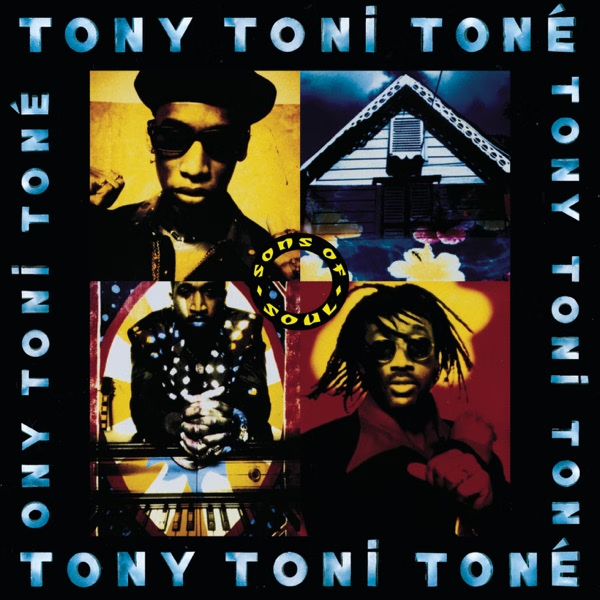
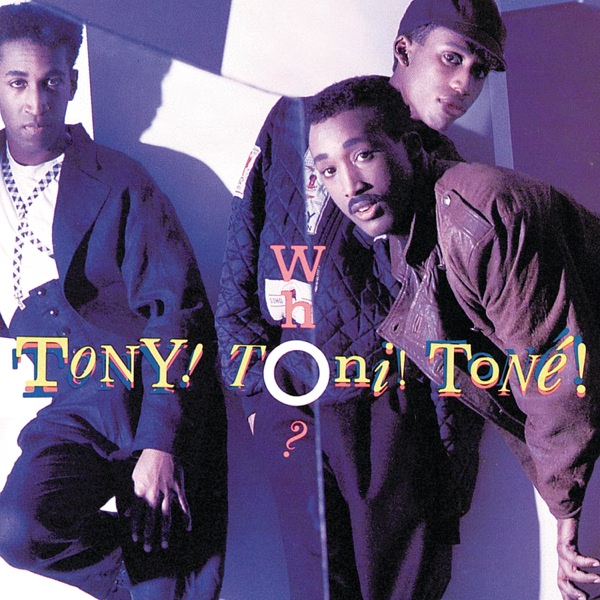
The cost of that approach was swimming against the current of the entire industry. The late 1980s and early 1990s were the era of new jack swing -- Teddy Riley's production style that blended hip-hop beats with R&B melodies, often built around drum machines and samples rather than live musicians. Tony! Toni! Toné! refused to follow that template even though it would have been the commercially safer choice. They used live drums, real bass, actual horn sections that required paying multiple musicians. Their debut album Who? in 1988 did not set the charts on fire, but it established them as a band with a vision that did not depend on trends. The follow-up The Revival in 1990 began to connect with a wider audience, and by the time Sons of Soul dropped in 1993, they had found their audience.
Anniversary is the one. Released in 1993, the song became a wedding standard and one of the most enduring R&B love songs of the entire decade. The opening guitar riff, the warm bassline that walks like it knows where it is going, Saadiq's vocal that carried both tenderness and swagger in equal measure -- it was a song that could not have been made by a producer in a control room punching in samples. It was made by a band in a room together, playing off each other's energy in real time.
The album also featured (Lay Your Head on My) Pillow and I Could Not Ask for More, a run of singles that proved the band was not a one-hit operation.
Tony! Toni! Toné! disbanded in the late 1990s as members pursued solo projects, most notably Raphael Saadiq's acclaimed solo career and his production work with D'Angelo, Erykah Badu, and the entire neo-soul movement that defined late 1990s Black music. But the band's influence on the sound of 1990s R&B is undeniable and still audible in contemporary music. They proved that live instrumentation could compete with drum machines in the marketplace, that a band from Oakland could define the sound of an era without moving to New York or Los Angeles, and that the funk did not have to be resurrected from old records -- it could be played fresh by people who understood where it came from and where it needed to go.