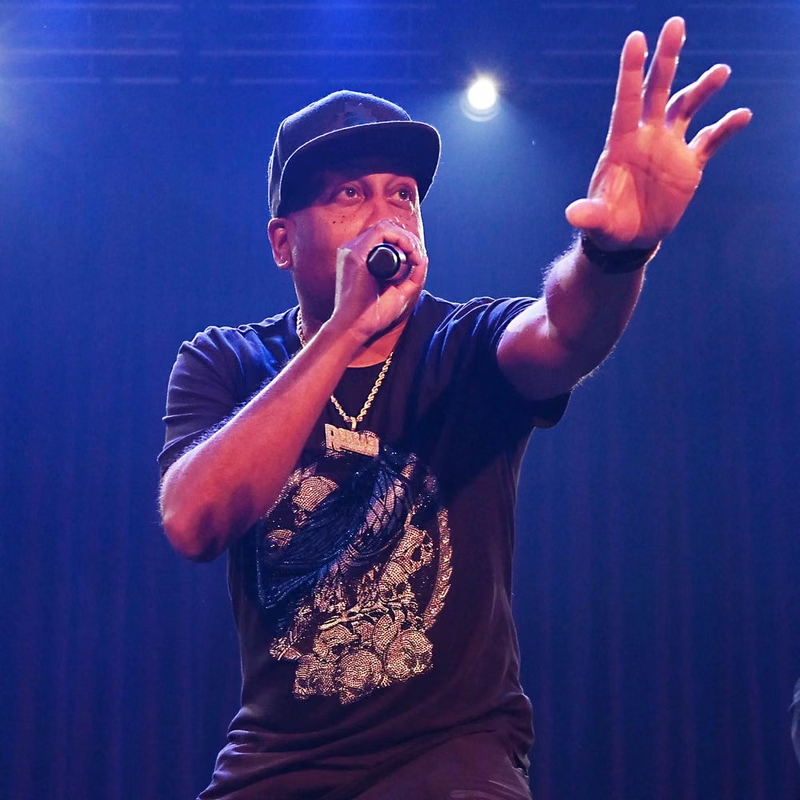
Rob Base
He walked into a recording studio in 1988 with a sample from Lyn Collins and a mission to make every person in America get on the dance floor. Rob Base was born in Harlem in 1967, grew up on the same blocks that produced some of hip-hop's most influential figures, and decided that what the genre needed at that moment was not lyrical complexity or political messaging. It was impact -- a track so direct that nobody could resist it. He and his partner DJ E-Z Rock crafted a record that distilled hip-hop to its purest party function: a beat that would not stop, a vocal that demanded participation, and a sample that everyone recognized the instant it dropped.

"It takes two to make a thing go right
It takes two to make it out of sight"

-- from It Takes Two

The cost of that track was the shadow it cast over everything else they did in the years that followed. It Takes Two became one of the most recognizable hip-hop records ever made, a wedding staple, a sports arena anthem, a song that has been sampled and referenced more times than most rappers' entire catalogs. But the album It Takes Two was more than that single -- it included Joy and Prepare, tracks that showed Base could ride a beat without relying on a familiar sample to carry him across the finish line. The industry, however, wanted more of the same, and the pressure to replicate a phenomenon that could not be replicated slowed the duo's momentum to a halt.

It Takes Two is the one, and it is enough to define a career. The song uses Lyn Collins' Think (About It) sample, the same break that had been a staple of breakdancing culture for years, and turns it into something that sounds like it was always meant to be a rap track rather than a funk instrumental. Base's delivery is not complex in the technical sense. It is perfectly timed, and timing matters more than complexity. He knows exactly when to pause for the beat to hit, when to shout, when to let the instrumental breathe.

Rob Base never became a multiplatinum star on the level of his peers from the same era, but It Takes Two has achieved something that few singles ever manage: it has become permanent, immune to trends. The song plays at every wedding, every sporting event, every moment that calls for a crowd to lose its collective mind. Thirty-five years after its release, it still lands the same way it did in 1988. That is not a fluke of timing. That is a track so perfectly constructed that it cannot be improved, only enjoyed.

Image Credits

1,414 artist portraits across 5 genres (Rock, Jazz, Soul, Blues, Folk). 1,363 sourced from Wikipedia (Creative Commons / Public Domain), 50 from Deezer (promotional artwork).

Full attribution breakdown →

Rob Base

He walked into a recording studio in 1988 with a sample from Lyn Collins and a mission to make every person in America get on the dance floor. Rob Base was born in Harlem in 1967, grew up on the same blocks that produced some of hip-hop's most influential figures, and decided that what the genre needed at that moment was not lyrical complexity or political messaging. It was impact -- a track so direct that nobody could resist it. He and his partner DJ E-Z Rock crafted a record that distilled hip-hop to its purest party function: a beat that would not stop, a vocal that demanded participation, and a sample that everyone recognized the instant it dropped.

"It takes two to make a thing go right
It takes two to make it out of sight"

-- from It Takes Two

The cost of that track was the shadow it cast over everything else they did in the years that followed. It Takes Two became one of the most recognizable hip-hop records ever made, a wedding staple, a sports arena anthem, a song that has been sampled and referenced more times than most rappers' entire catalogs. But the album It Takes Two was more than that single -- it included Joy and Prepare, tracks that showed Base could ride a beat without relying on a familiar sample to carry him across the finish line. The industry, however, wanted more of the same, and the pressure to replicate a phenomenon that could not be replicated slowed the duo's momentum to a halt.

It Takes Two is the one, and it is enough to define a career. The song uses Lyn Collins' Think (About It) sample, the same break that had been a staple of breakdancing culture for years, and turns it into something that sounds like it was always meant to be a rap track rather than a funk instrumental. Base's delivery is not complex in the technical sense. It is perfectly timed, and timing matters more than complexity. He knows exactly when to pause for the beat to hit, when to shout, when to let the instrumental breathe.

Rob Base never became a multiplatinum star on the level of his peers from the same era, but It Takes Two has achieved something that few singles ever manage: it has become permanent, immune to trends. The song plays at every wedding, every sporting event, every moment that calls for a crowd to lose its collective mind. Thirty-five years after its release, it still lands the same way it did in 1988. That is not a fluke of timing. That is a track so perfectly constructed that it cannot be improved, only enjoyed.

The Sunday Drop
One song. One story. Every Sunday.

No algorithms. No trending sections. Just a song someone loved and the story behind it. Delivered Sunday morning.

Free. No spam. Unsubscribe anytime.

Image Credits

1,414 artist portraits across 5 genres (Rock, Jazz, Soul, Blues, Folk). 1,363 sourced from Wikipedia (Creative Commons / Public Domain), 50 from Deezer (promotional artwork).

Full attribution breakdown →

0:00
0:00
The Sunday Drop One song. One story. Every Sunday.