Muddy Waters
1913 – 1983 (70)
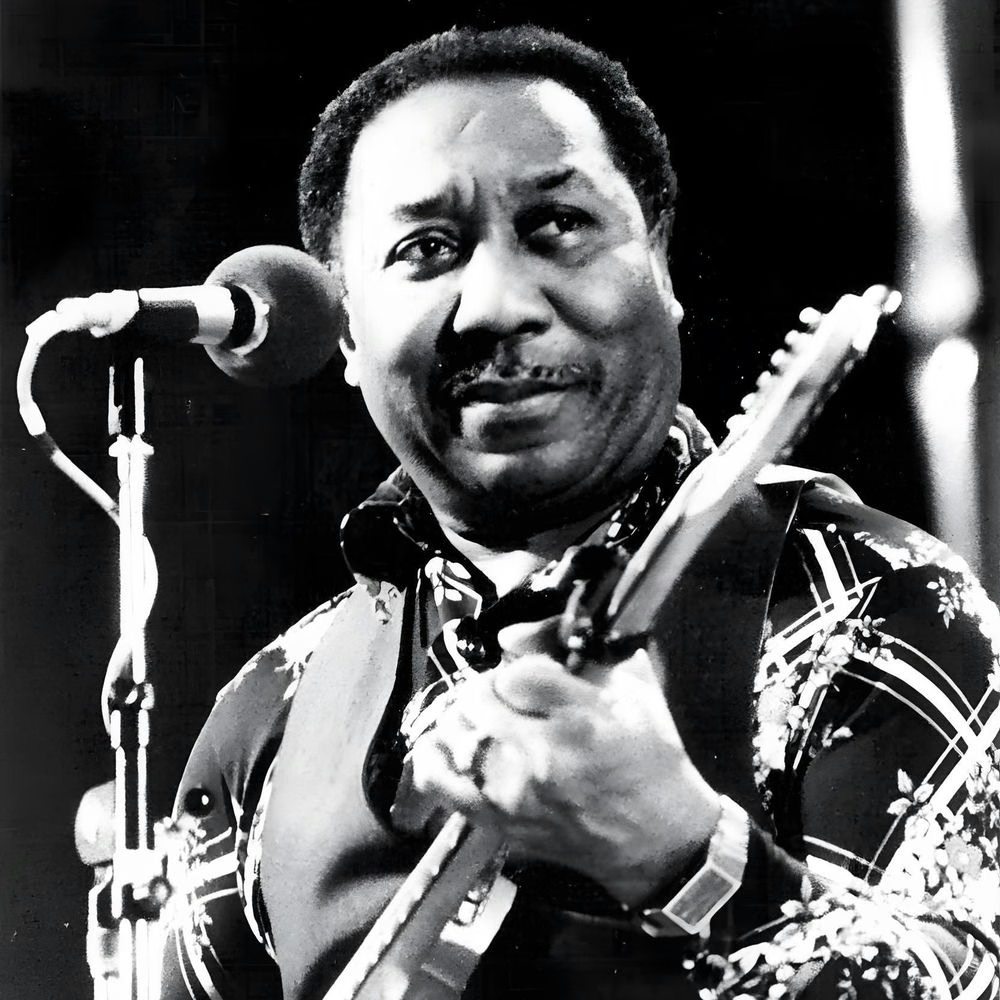
He walked into a recording studio in Chicago in 1948, sat down with his amplifier, and changed the sound of the blues forever. Before that, the Delta blues was acoustic, a man and his guitar on a porch or at a crossroads. Muddy Waters plugged in, and the amplifier became as important as the voice.
The electric guitar growled, the slide cried through the speaker, and the blues was no longer a sound from the past -- it was the sound of the city rising from the Mississippi Delta into the industrial North.

Muddy Waters was born McKinley Morganfield in 1913 on Stovall Plantation in Mississippi, where the blues was not a profession but a way of talking about what the day cost you. He learned guitar from Son House and absorbed Robert Johnson's recordings, studying the slide technique that would become his signature. When he moved to Chicago in 1943 as part of the Great Migration, he brought the Delta with him and found that the city needed a louder voice. The acoustic guitar could not compete with the noise of the factories, the trains, the crowded streets of the industrial North. He plugged in. Chess Records signed him in 1948, and the electric Chicago blues was born in a series of sessions that sounded like a man fighting back against the machine with nothing but a guitar and his own two hands.

Muddy Waters interview 1990

Hoochie Coochie Man is the one. That opening riff, the bass line that walks like it owns the street, Muddy's voice coming in not as a singer but as a conjurer calling spirits. Willie Dixon wrote it, but Muddy made it a spell that has not worn off. I'm a man.
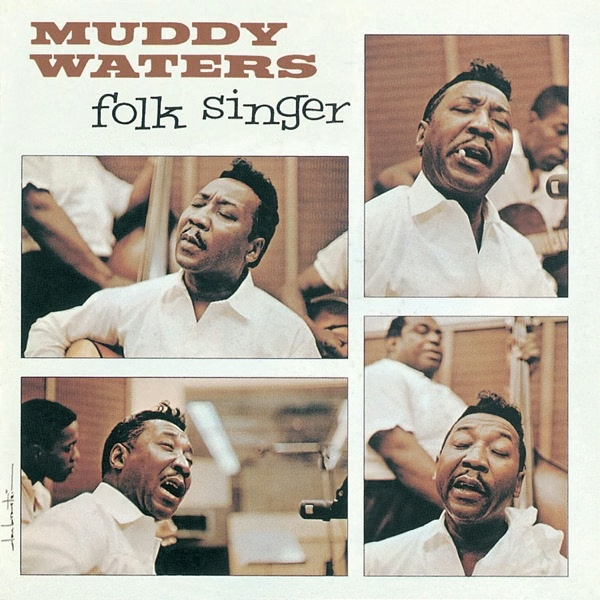
Folk Singer (1964)

I'm a hoochie coochie man. Every British rock band in the 1960s learned from this record. The Rolling Stones named themselves after one of his songs. The blues that Muddy Waters electrified became the DNA of rock and roll, and he never pretended to be comfortable with the fame it brought him. He kept playing small clubs even after the world caught up, kept recording, kept being the man who made the guitar sound like it had something urgent to say.

He died in 1983 at seventy, and the music he left behind is the foundation of every electric guitar that has been plugged in since. The Rolling Stones, Led Zeppelin, Eric Clapton, Jimi Hendrix -- they all came through Muddy Waters. He did not invent the blues. He simply plugged it in and let the electricity do the rest. The amplifier was not a gimmick. It was the truth the Delta had been trying to tell, finally loud enough for the whole world to hear and recognize itself in the sound.

Muddy Waters was profiled in the documentary, Muddy Waters: The Hoochie Coochie Man, in 2001.
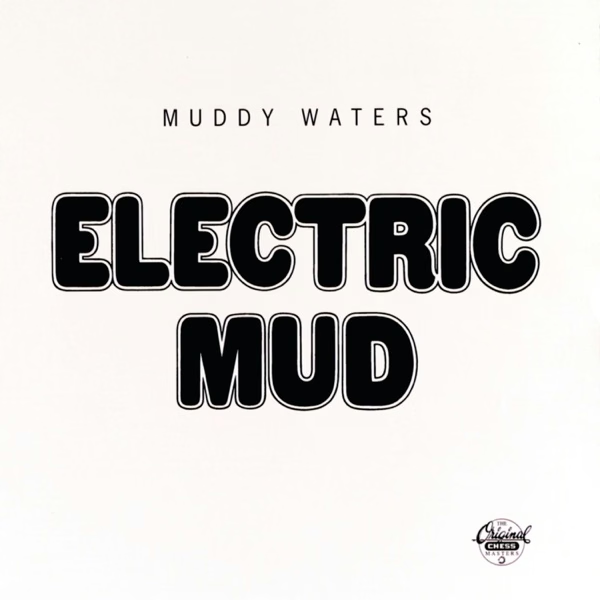
Image Credits

1,414 artist portraits across 5 genres (Rock, Jazz, Soul, Blues, Folk). 1,363 sourced from Wikipedia (Creative Commons / Public Domain), 50 from Deezer (promotional artwork).

Full attribution breakdown →

Muddy Waters

1913 – 1983 (70)
He walked into a recording studio in Chicago in 1948, sat down with his amplifier, and changed the sound of the blues forever. Before that, the Delta blues was acoustic, a man and his guitar on a porch or at a crossroads. Muddy Waters plugged in, and the amplifier became as important as the voice.
The electric guitar growled, the slide cried through the speaker, and the blues was no longer a sound from the past -- it was the sound of the city rising from the Mississippi Delta into the industrial North.

Muddy Waters was born McKinley Morganfield in 1913 on Stovall Plantation in Mississippi, where the blues was not a profession but a way of talking about what the day cost you. He learned guitar from Son House and absorbed Robert Johnson's recordings, studying the slide technique that would become his signature. When he moved to Chicago in 1943 as part of the Great Migration, he brought the Delta with him and found that the city needed a louder voice. The acoustic guitar could not compete with the noise of the factories, the trains, the crowded streets of the industrial North. He plugged in. Chess Records signed him in 1948, and the electric Chicago blues was born in a series of sessions that sounded like a man fighting back against the machine with nothing but a guitar and his own two hands.

Muddy Waters interview 1990

Hoochie Coochie Man is the one. That opening riff, the bass line that walks like it owns the street, Muddy's voice coming in not as a singer but as a conjurer calling spirits. Willie Dixon wrote it, but Muddy made it a spell that has not worn off. I'm a man.

Folk Singer (1964)

I'm a hoochie coochie man. Every British rock band in the 1960s learned from this record. The Rolling Stones named themselves after one of his songs. The blues that Muddy Waters electrified became the DNA of rock and roll, and he never pretended to be comfortable with the fame it brought him. He kept playing small clubs even after the world caught up, kept recording, kept being the man who made the guitar sound like it had something urgent to say.

He died in 1983 at seventy, and the music he left behind is the foundation of every electric guitar that has been plugged in since. The Rolling Stones, Led Zeppelin, Eric Clapton, Jimi Hendrix -- they all came through Muddy Waters. He did not invent the blues. He simply plugged it in and let the electricity do the rest. The amplifier was not a gimmick. It was the truth the Delta had been trying to tell, finally loud enough for the whole world to hear and recognize itself in the sound.

Muddy Waters was profiled in the documentary, Muddy Waters: The Hoochie Coochie Man, in 2001.
Folk Singer (1964) Folk Singer (1964)
Electric Mud (1968) Electric Mud (1968)
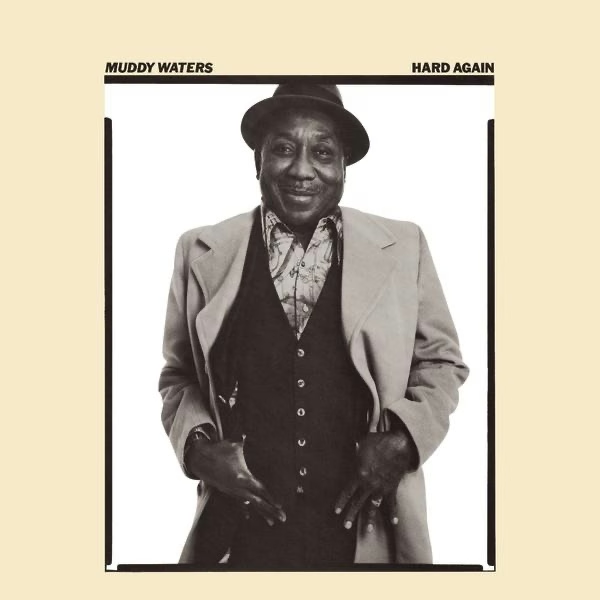
Hard Again (1977) Hard Again (1977)
Muddy Waters Sings Big Bill Broonzy (1960)
Folk Singer (1964)
Muddy
Brass and the Blues (1966)
Down on Stovall’s Plantation (1966)
Super Blues (1967)
The Super Super Blues Band (1967)
Electric Mud (1968)
Fathers and Sons (1969)
After the Rain (1969)
The London Muddy Waters Sessions (1972)
Can’t Get No Grindin’ (1973)
“Unk” in Funk (1974)
London Revisited (1974)
The Muddy Waters Woodstock Album (1975)
Hard Again (1977)
blueschicago blues
The Sunday Drop
One song. One story. Every Sunday.

No algorithms. No trending sections. Just a song someone loved and the story behind it. Delivered Sunday morning.

Free. No spam. Unsubscribe anytime.

Image Credits

1,414 artist portraits across 5 genres (Rock, Jazz, Soul, Blues, Folk). 1,363 sourced from Wikipedia (Creative Commons / Public Domain), 50 from Deezer (promotional artwork).

Full attribution breakdown →

0:00
0:00
The Sunday Drop One song. One story. Every Sunday.