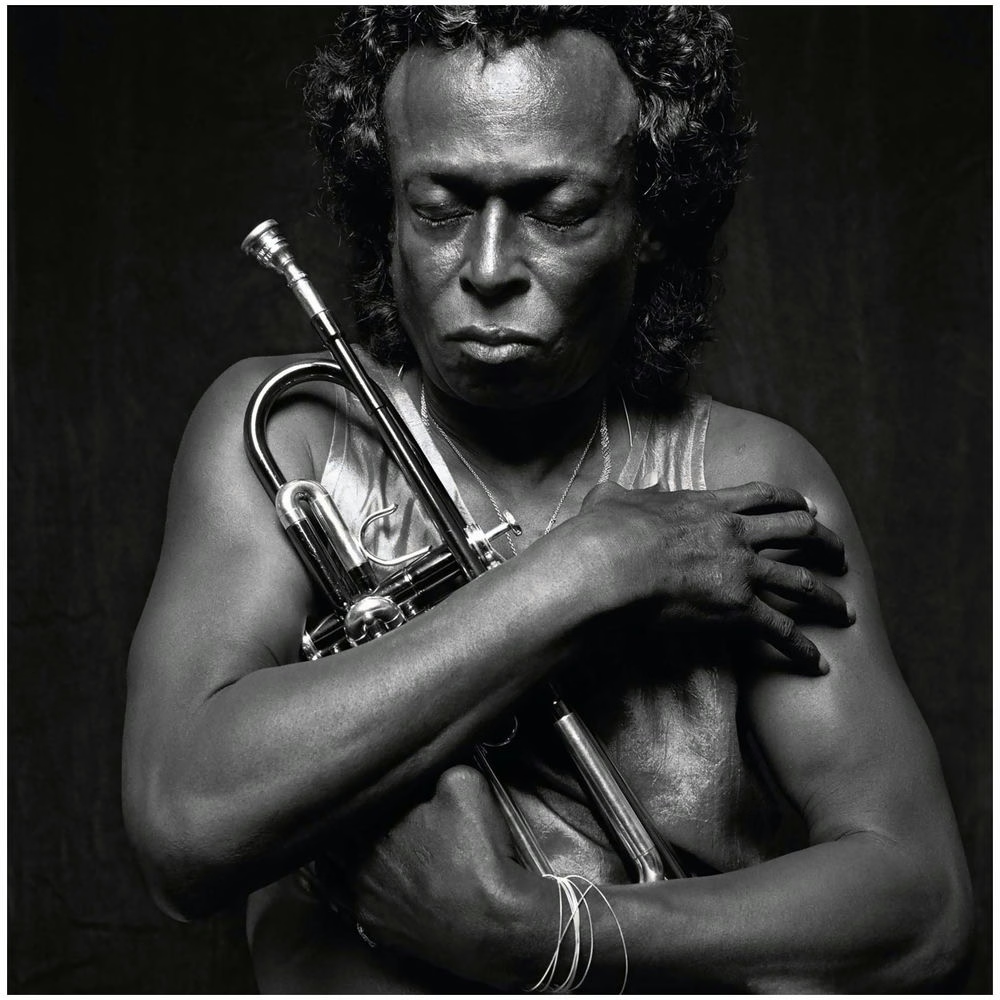
Miles Davis
1926 – 1991 (65)
He walked onto the stage of the Newport Jazz Festival in 1955, a twenty-nine-year-old trumpeter from East St. Louis who had already played with Charlie Parker and Dizzy Gillespie, and played a solo that made the jazz establishment rewrite its entire understanding of what the instrument could do. The solo was on "'Round Midnight," and it was quiet.
That was the surprise. Miles Davis did not play fast to prove he could. He played slow, with space between the notes, with the kind of silence that made the audience lean forward. He understood that what you did not play was as important as what you did.

Miles Davis was born in 1926 to a middle-class family that expected him to become a doctor. His father was a successful dentist. When Miles asked for a trumpet at thirteen, his father bought it for him, not knowing he was financing the most important instrumental voice in jazz history. He studied at Juilliard in New York but spent most of his time in the clubs on 52nd Street, learning from the bebop masters in real time. The lessons he learned there were harder but faster. By nineteen, he was recording with Charlie Parker, one of the most demanding bandleaders in jazz. The cost of that education was heroin addiction, which he kicked cold turkey in 1954 by locking himself in a room on his father's farm. He came out clean and played the Newport solo that changed everything.

Kind of Blue is the one. Released in 1959, it is the best-selling jazz album of all time and the most influential. Davis assembled a band that included John Coltrane, Cannonball Adderley, Bill Evans, and Paul Chambers, then told them to play modes instead of chord changes. The result was "So What," "Freddie Freeloader," and "Blue in Green" -- music that moved like weather, not like a train schedule.
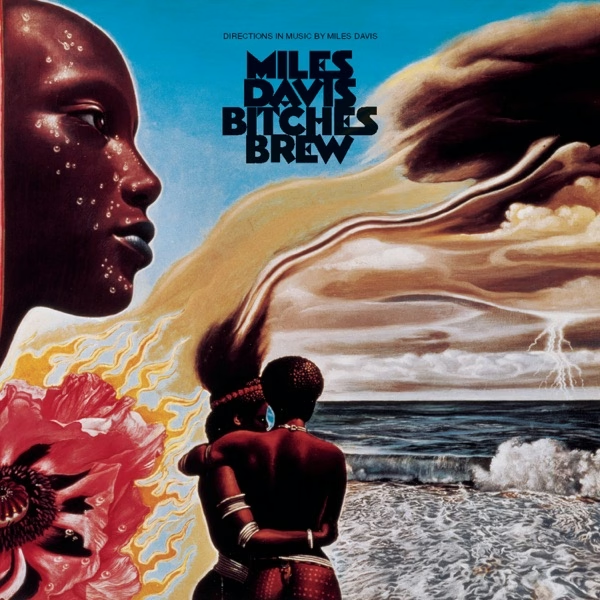
Bitches Brew (1970)

Every note sounds inevitable, but none of them were fully composed. The album was recorded in two sessions, and the musicians had never seen the music before they played it. That is not a miracle. That is what happens when the best players in the world trust each other completely.

He did not stop there. In the late 1960s, as rock and funk were reshaping popular music, Davis assembled a new band and released Bitches Brew, an electric album that fused jazz with funk rhythms, studio effects, and the kind of open-ended jamming that made purists furious and audiences ecstatic. He was called a sellout. He called it evolution. The album sold half a million copies and created an entire genre -- jazz fusion. He kept changing: the electric period, the funk period, the 1980s pop period with "Tutu" and "Human Nature." Each phase alienated some listeners and converted others. Davis did not care. He was not making music for the critics. He was making music for the moment he was in, and the moment kept moving.

He died in 1991 at sixty-five, and the argument about his best period is still unresolved. That is the legacy. Miles Davis reinvented jazz not once but three times -- the cool jazz of the 1950s, the modal jazz of Kind of Blue, the electric fusion of Bitches Brew -- and each reinvention was so complete that it created a new school. He was not the fastest player. He was not the most technically gifted. He was the one who heard what jazz needed to become next, and he had the nerve to take it there. The silence between his notes is louder than most musicians' entire careers.

Miles Davis was profiled in the documentary, Miles Davis: Birth of the Cool, in 2019.
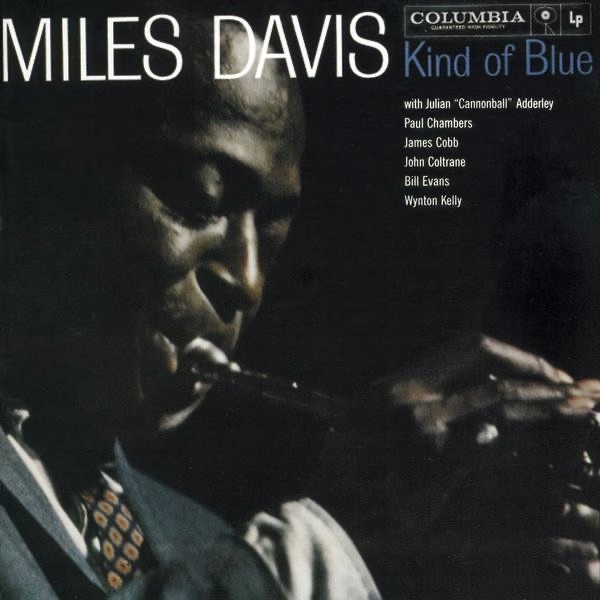
Image Credits

1,414 artist portraits across 5 genres (Rock, Jazz, Soul, Blues, Folk). 1,363 sourced from Wikipedia (Creative Commons / Public Domain), 50 from Deezer (promotional artwork).

Full attribution breakdown →

Miles Davis

1926 – 1991 (65)
He walked onto the stage of the Newport Jazz Festival in 1955, a twenty-nine-year-old trumpeter from East St. Louis who had already played with Charlie Parker and Dizzy Gillespie, and played a solo that made the jazz establishment rewrite its entire understanding of what the instrument could do. The solo was on "'Round Midnight," and it was quiet.
That was the surprise. Miles Davis did not play fast to prove he could. He played slow, with space between the notes, with the kind of silence that made the audience lean forward. He understood that what you did not play was as important as what you did.

Miles Davis was born in 1926 to a middle-class family that expected him to become a doctor. His father was a successful dentist. When Miles asked for a trumpet at thirteen, his father bought it for him, not knowing he was financing the most important instrumental voice in jazz history. He studied at Juilliard in New York but spent most of his time in the clubs on 52nd Street, learning from the bebop masters in real time. The lessons he learned there were harder but faster. By nineteen, he was recording with Charlie Parker, one of the most demanding bandleaders in jazz. The cost of that education was heroin addiction, which he kicked cold turkey in 1954 by locking himself in a room on his father's farm. He came out clean and played the Newport solo that changed everything.

Kind of Blue is the one. Released in 1959, it is the best-selling jazz album of all time and the most influential. Davis assembled a band that included John Coltrane, Cannonball Adderley, Bill Evans, and Paul Chambers, then told them to play modes instead of chord changes. The result was "So What," "Freddie Freeloader," and "Blue in Green" -- music that moved like weather, not like a train schedule.

Bitches Brew (1970)

Every note sounds inevitable, but none of them were fully composed. The album was recorded in two sessions, and the musicians had never seen the music before they played it. That is not a miracle. That is what happens when the best players in the world trust each other completely.

He did not stop there. In the late 1960s, as rock and funk were reshaping popular music, Davis assembled a new band and released Bitches Brew, an electric album that fused jazz with funk rhythms, studio effects, and the kind of open-ended jamming that made purists furious and audiences ecstatic. He was called a sellout. He called it evolution. The album sold half a million copies and created an entire genre -- jazz fusion. He kept changing: the electric period, the funk period, the 1980s pop period with "Tutu" and "Human Nature." Each phase alienated some listeners and converted others. Davis did not care. He was not making music for the critics. He was making music for the moment he was in, and the moment kept moving.

He died in 1991 at sixty-five, and the argument about his best period is still unresolved. That is the legacy. Miles Davis reinvented jazz not once but three times -- the cool jazz of the 1950s, the modal jazz of Kind of Blue, the electric fusion of Bitches Brew -- and each reinvention was so complete that it created a new school. He was not the fastest player. He was not the most technically gifted. He was the one who heard what jazz needed to become next, and he had the nerve to take it there. The silence between his notes is louder than most musicians' entire careers.

Miles Davis was profiled in the documentary, Miles Davis: Birth of the Cool, in 2019.
Bitches Brew (1970) Bitches Brew (1970)
Kind Of Blue (1959) Kind Of Blue (1959)
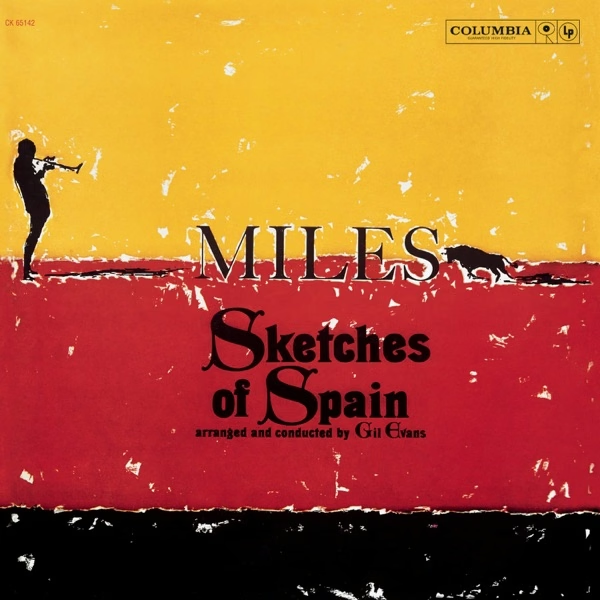
Sketches Of Spain (1960) Sketches Of Spain (1960)
Miles '55 (Remastered 2025) (2025)
INTEGRAL MILES DAVIS 1945-1951 (2025)
Miles '54: The Prestige Recordings (Remastered 2024) (2024)
Miles in France 1963 & 1964 - Miles Davis Quintet: The Bootleg Series, Vol. 8 (2024)
INTEGRAL MILES DAVIS 1951-1956 (2024)
Turnaround: Rare Miles From The Complete On The Corner Sessions (2023)
On Savoy: Charlie Parker & Miles Davis (2022)
That's What Happened 1982-1985: The Bootleg Series, Vol. 7 (2022)
What It Is: Montreal 7/7/83 (Live) (2022)
Champions: Rare Miles from the Complete Jack Johnson Sessions (2021)
Double Image: Rare Miles From The Complete Bitches Brew Sessions (2020)
Music From and Inspired by The Film Birth Of The Cool (2020)
1951-1959 The Essential Works (2019)
Rubberband (2019)
The Final Tour: The Bootleg Series, Vol. 6 (2018)
Miles Davis Quintet: Freedom Jazz Dance: The Bootleg Series, Vol. 5 (2016)
The Complete Prestige 10-Inch LP Collection (2016)
Everything's Beautiful (2016)
Miles Ahead (Original Motion Picture Soundtrack) (2016)
Miles Davis at Newport: 1955-1975: The Bootleg Series, Vol. 4 (2015)
Take Off: The Complete Blue Note Albums (2019)
Miles at The Fillmore: Miles Davis 1970: The Bootleg Series, Vol. 3 (2014)
Setlist: The Very Best of Miles Davis LIVE - (Electric) (2012)
Miles Davis Quintet: Live In Europe 1967: The Bootleg Series, Vol. 1 (2011)
Setlist: The Very Best of Miles Davis LIVE (2011)
Embraceable (2009)
Bitches Brew Live (2011)
The Definitive Miles Davis on Prestige (2011)
Perfect Way: The Miles Davis Anthology - The Warner Bros. Years (2010)
Dig [Original Jazz Classics Remasters] (OJC Remaster) (2010)
Groovin' High (2018)
The Classic Prestige Sessions, 1951-1956 (Digital eBooklet) (2009)
Muted Miles (2008)
Steamin' [Rudy Van Gelder edition] (2012)
Out Of Nowhere: The Rise Of Miles Davis (2009)
Jazz Moods - Cool (2004)
Birdsong (2009)
The Best Of Miles Davis (2011)
Birdland 1951 (Reissue) (2018)
Prestige Profiles: Miles Davis (2006)
The Complete Jack Johnson Sessions (2003)
Cool Miles Davis (2004)
Seven Steps: The Complete Columbia Recordings Of Miles Davis 1963-1964 (2003)
Miles Davis Plays For Lovers (2011)
The Best Of Miles Davis (2002)
The Last Word - The Warner Bros. Years (2002)
Timeless: Miles Davis (2009)
The Complete In A Silent Way Sessions (2004)
The Complete In A Silent Way Sessions (2001)
The Essential Miles Davis (2001)
Bitches Brew (1970)
Kind Of Blue (1959)
Sketches Of Spain (1960)
jazzjazz fusion
The Sunday Drop
One song. One story. Every Sunday.

No algorithms. No trending sections. Just a song someone loved and the story behind it. Delivered Sunday morning.

Free. No spam. Unsubscribe anytime.

Image Credits

1,414 artist portraits across 5 genres (Rock, Jazz, Soul, Blues, Folk). 1,363 sourced from Wikipedia (Creative Commons / Public Domain), 50 from Deezer (promotional artwork).

Full attribution breakdown →

0:00
0:00
The Sunday Drop One song. One story. Every Sunday.