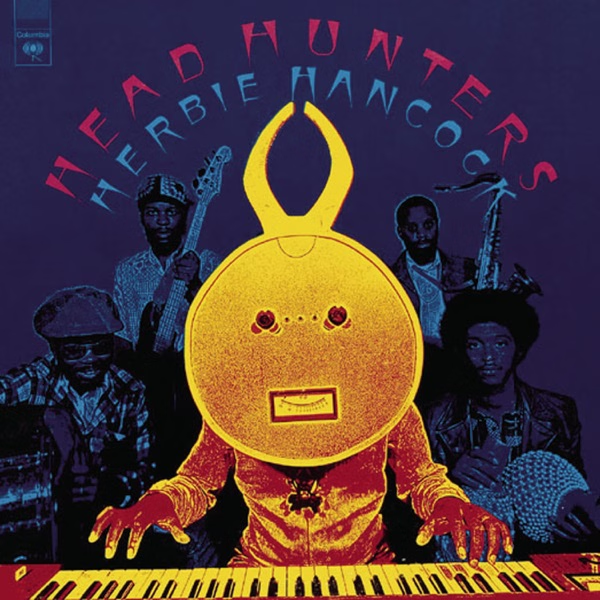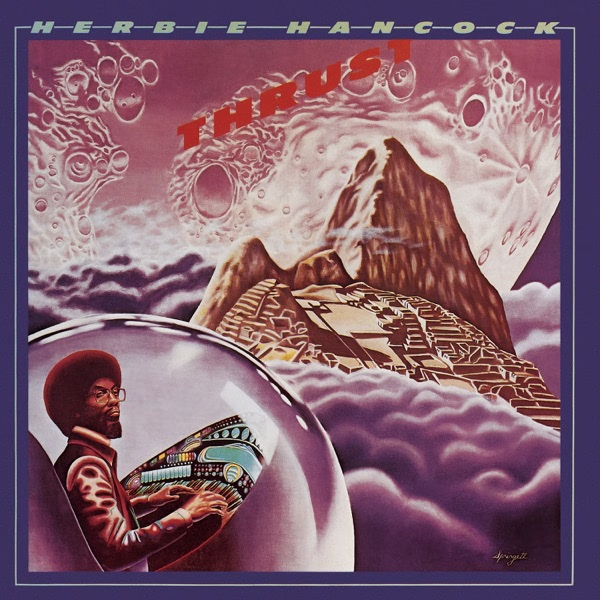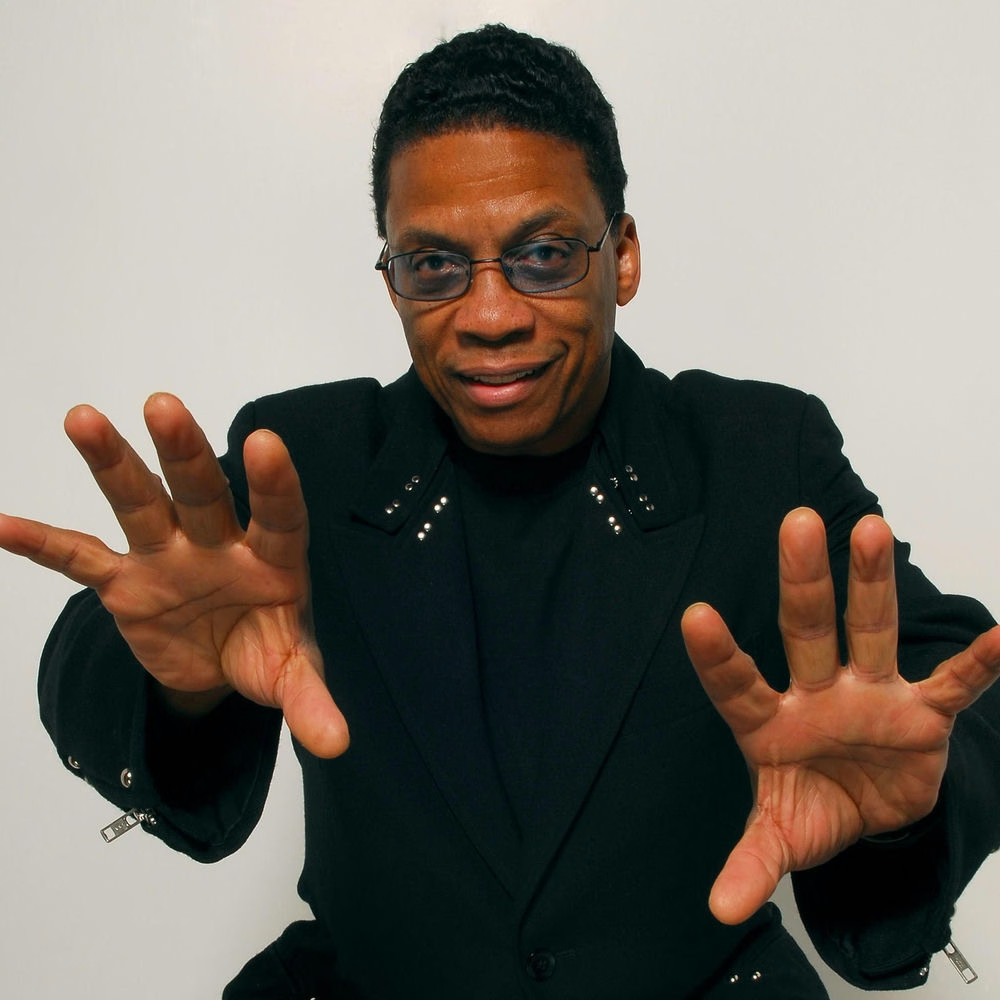
The jazz world of the 1960s was hierarchical, serious, and suspicious of popular success. Hancock walked into Miles Davis's band and found a laboratory, not a gig. Miles pushed him to simplify, stretch, and abandon the chordal language he had mastered. The cost was comfort: Hancock had to unlearn what he knew in order to find what he needed. He left Miles in 1968 and formed his own sextet, then the Headhunters, then a series of experiments that left purists bewildered. The jazz establishment accused him of selling out. The funk audience did not care about jazz credentials. Hancock stayed in the middle, taking fire from both sides, and kept making records that sounded like nobody else.
"Chameleon 0:30" from 1973 is the ultimate document of his funk period, and it is a masterpiece of minimalism disguised as maximalism. That bassline -- a single repeating figure played on a synthesizer -- is one of the most recognizable riffs in popular music. The track unfolds over sixteen minutes on the album, giving space for Hancock's electric piano, Bennie Maupin's saxophone, Harvey Mason's drums, and Paul Jackson's actual bass to weave in and out. The title is the thesis: Hancock changes to survive, to grow, to stay alive as an artist.
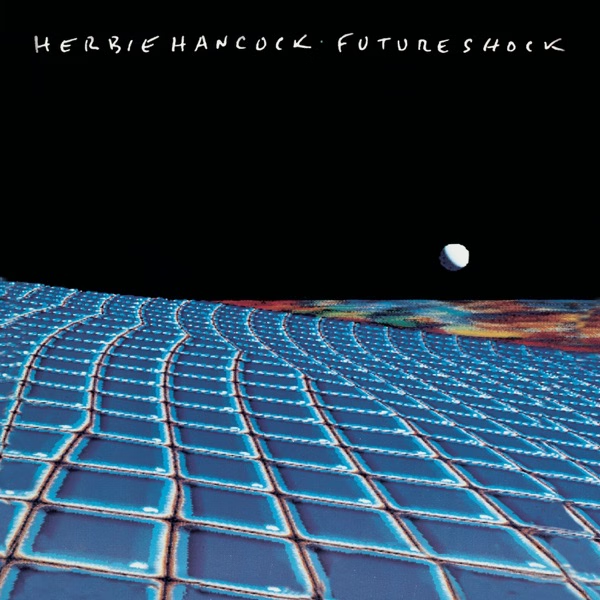
The song does not have a traditional chorus. It has a state of mind. You do not listen to "Chameleon." You inhabit it. That groove became the template for jazz-funk fusion for decades afterward, sampled, studied, and never bettered.
Hancock is still alive, still performing, still searching. He has won fourteen Grammy Awards, an Oscar for "Round Midnight," and a lifetime of respect that crosses every boundary of genre. He has collaborated with everyone from Stevie Wonder to Joni Mitchell to Wayne Shorter, Jaco Pastorius, the Headhunters to classical orchestras. The legacy is not any single style or period -- it is the example of a mind that refused to stop moving. Herbie Hancock proved that Black music could be intellectually rigorous and viscerally funky at the same time, that the academy and the dance floor were not opposites, and that the future always belonged to the curious. He did not just play changes. He was the change.