George Benson
1943 –
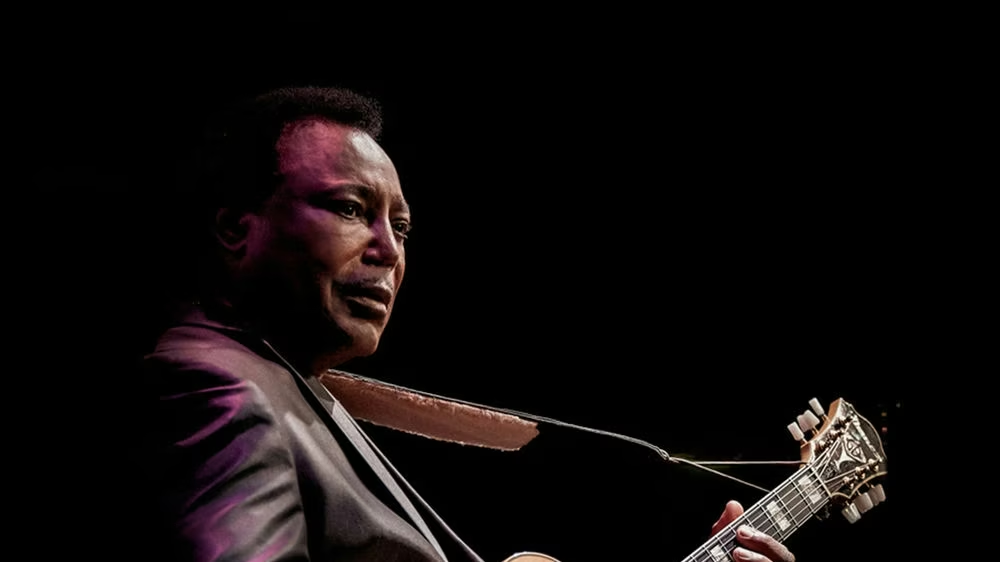
He walked onto the stage in the 1960s with a guitar and a smile that suggested he was enjoying a private joke that nobody else was in on, and the audience leaned in to find out what it was. George Benson was born in Pittsburgh in 1943, raised in the Hill District where jazz and R&B flowed through every corner, and recorded his first single at ten years old. He was a child prodigy who grew into a virtuoso, a jazz guitarist who could play circles around most of his peers and then open his mouth and sing a pop hit that everybody recognized.
The combination made him impossible to categorize, which made marketing difficult but the music unforgettable. He played with Brother Jack McDuff as a teenager, touring the chitlin circuit and learning from organ groups about groove and space.

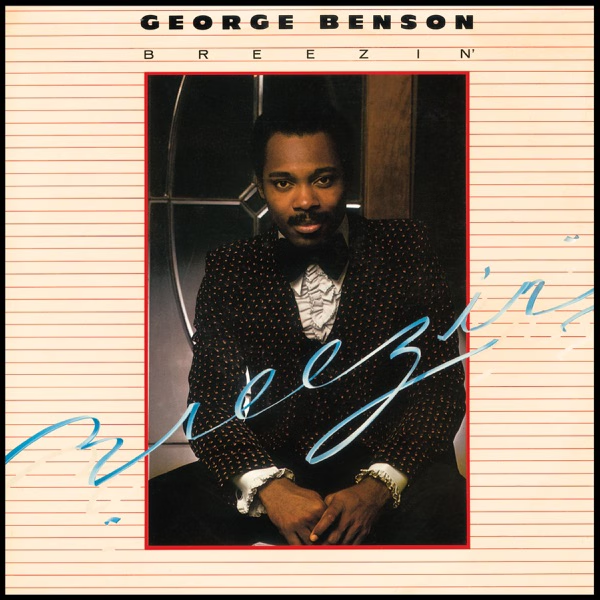
The cost of that versatility was credibility with purists who viewed jazz as a sacred language that should not be translated for mass consumption. When Benson released Breezin' in 1976, an album that blended jazz, R&B, and pop into a sound that radio programmers loved, the jazz establishment accused him of selling out his roots and abandoning the tradition. The album went triple platinum and won three Grammys anyway, with the title track becoming one of the most recognizable guitar recordings of the decade. The success gave Benson the freedom to do whatever he wanted in the studio, and he used that freedom to record some of the most enduring crossover jazz of the era.

Give Me the Night is the one. Produced by Quincy Jones in 1980, the song is a perfect fusion of jazz harmony with pop production that still sounds fresh decades later. Benson's guitar solo is economical and precise -- he does not play a single unnecessary note. His vocal sits on top of the Quincy Jones arrangement like he is having the time of his life.
The New Boss Guitar of George Benson

Ten Grammys and a National Endowment for the Arts Jazz Master award later, he had the ability to play a jazz festival and a pop arena in the same week without changing his approach. He never apologized for his success, and the guitar kept smiling through every note.
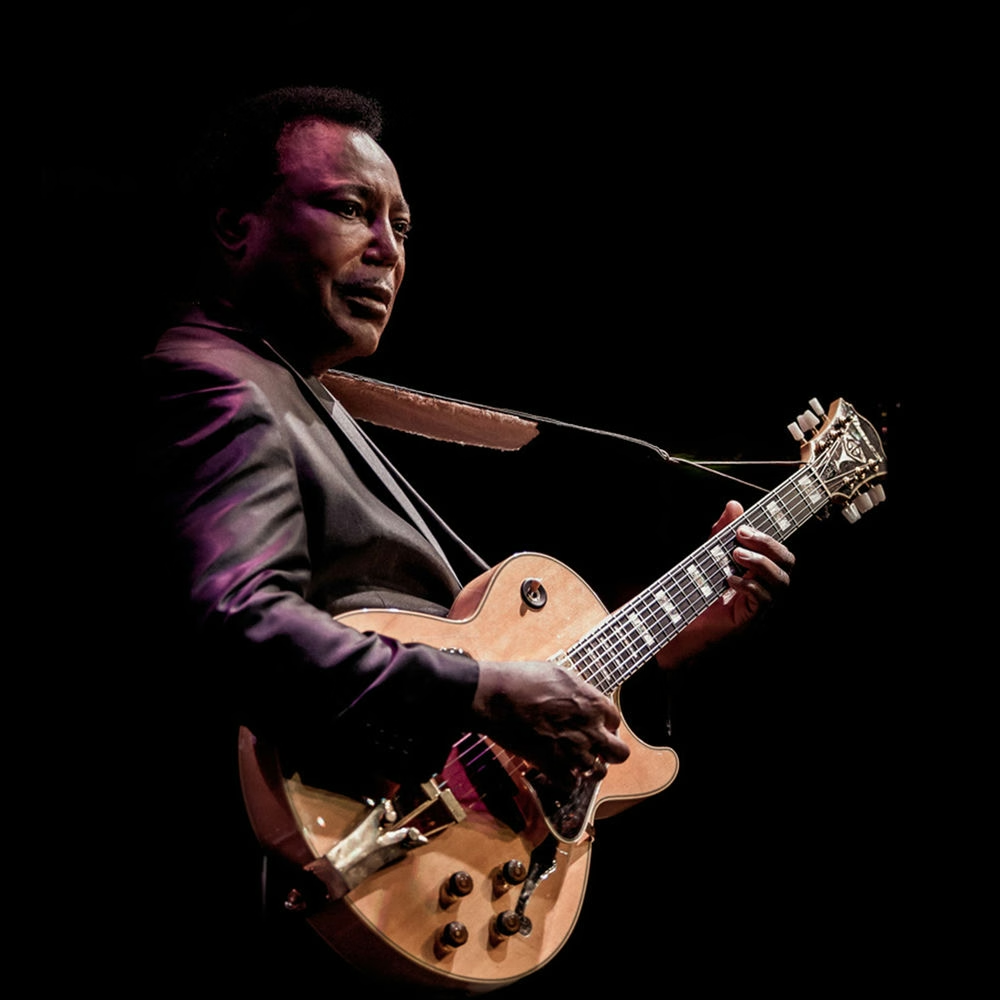
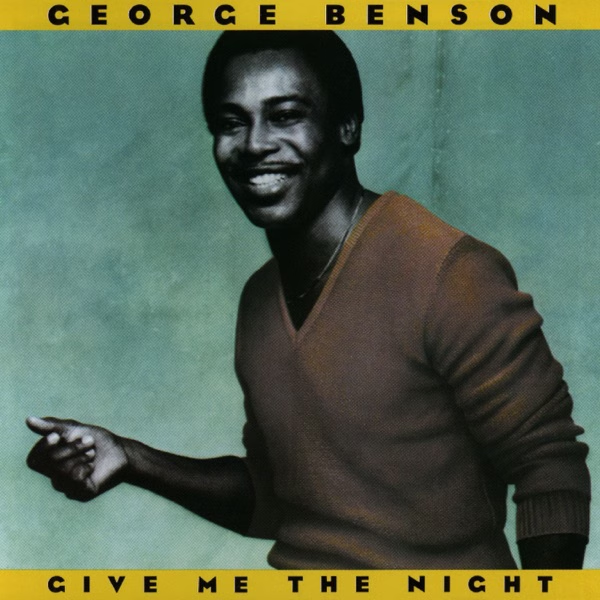
Image Credits

1,414 artist portraits across 5 genres (Rock, Jazz, Soul, Blues, Folk). 1,363 sourced from Wikipedia (Creative Commons / Public Domain), 50 from Deezer (promotional artwork).

Full attribution breakdown →

George Benson

1943 –
He walked onto the stage in the 1960s with a guitar and a smile that suggested he was enjoying a private joke that nobody else was in on, and the audience leaned in to find out what it was. George Benson was born in Pittsburgh in 1943, raised in the Hill District where jazz and R&B flowed through every corner, and recorded his first single at ten years old. He was a child prodigy who grew into a virtuoso, a jazz guitarist who could play circles around most of his peers and then open his mouth and sing a pop hit that everybody recognized.
The combination made him impossible to categorize, which made marketing difficult but the music unforgettable. He played with Brother Jack McDuff as a teenager, touring the chitlin circuit and learning from organ groups about groove and space.

The cost of that versatility was credibility with purists who viewed jazz as a sacred language that should not be translated for mass consumption. When Benson released Breezin' in 1976, an album that blended jazz, R&B, and pop into a sound that radio programmers loved, the jazz establishment accused him of selling out his roots and abandoning the tradition. The album went triple platinum and won three Grammys anyway, with the title track becoming one of the most recognizable guitar recordings of the decade. The success gave Benson the freedom to do whatever he wanted in the studio, and he used that freedom to record some of the most enduring crossover jazz of the era.

Give Me the Night is the one. Produced by Quincy Jones in 1980, the song is a perfect fusion of jazz harmony with pop production that still sounds fresh decades later. Benson's guitar solo is economical and precise -- he does not play a single unnecessary note. His vocal sits on top of the Quincy Jones arrangement like he is having the time of his life.

The New Boss Guitar of George Benson

Ten Grammys and a National Endowment for the Arts Jazz Master award later, he had the ability to play a jazz festival and a pop arena in the same week without changing his approach. He never apologized for his success, and the guitar kept smiling through every note.
The New Boss Guitar of George Benson The New Boss Guitar of George Benson
It's Uptown It's Uptown
The George Benson Cookbook The George Benson Cookbook
The New Boss Guitar of George Benson
It's Uptown
The George Benson Cookbook
Giblet Gravy
Shape of Things to Come
Goodies
Tell It Like It Is
The Other Side of Abbey Road
Beyond the Blue Horizon
White Rabbit
Body Talk
Bad Benson
Good King Bad
Benson & Farrell
Breezin'
In Flight
Livin' Inside Your Love
Give Me the Night
In Your Eyes
Pacific Fire
I Got a Woman and Some Blues
20/20
While the City Sleeps...
Collaboration (George Benson & Earl Klugh album)
Twice the Love
Tenderly
Big Boss Band
Love Remembers
That's Right
Standing Together
Absolute Benson
Irreplaceable
Givin' It Up
Songs and Stories
Guitar Man
Inspiration: A Tribute to Nat King Cole
Walking to New Orleans
r&bjazzsoulfunk
The Sunday Drop
One song. One story. Every Sunday.

No algorithms. No trending sections. Just a song someone loved and the story behind it. Delivered Sunday morning.

Free. No spam. Unsubscribe anytime.

Image Credits

1,414 artist portraits across 5 genres (Rock, Jazz, Soul, Blues, Folk). 1,363 sourced from Wikipedia (Creative Commons / Public Domain), 50 from Deezer (promotional artwork).

Full attribution breakdown →

0:00
0:00
The Sunday Drop One song. One story. Every Sunday.