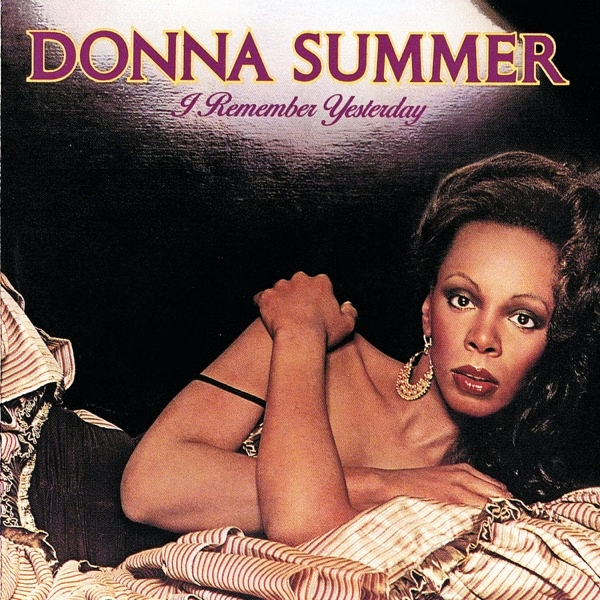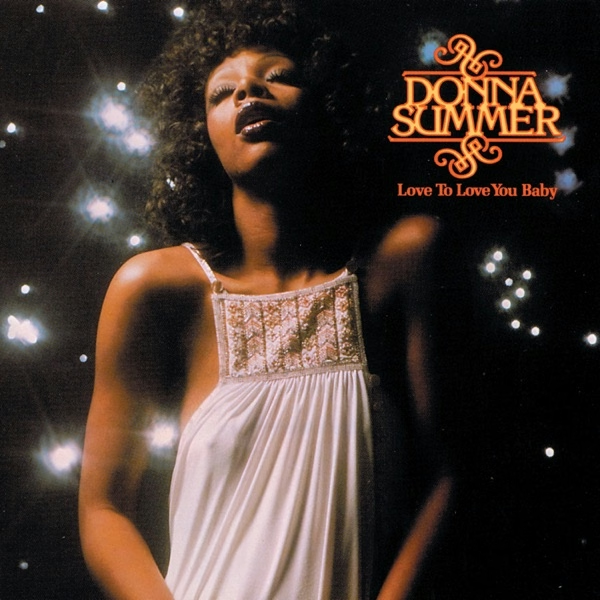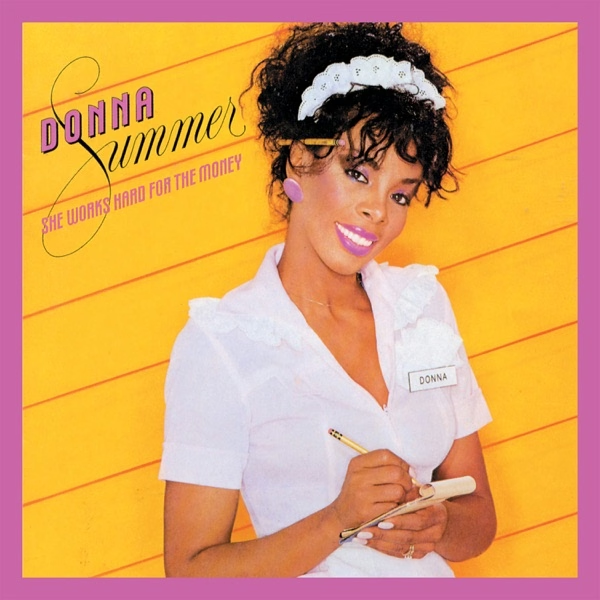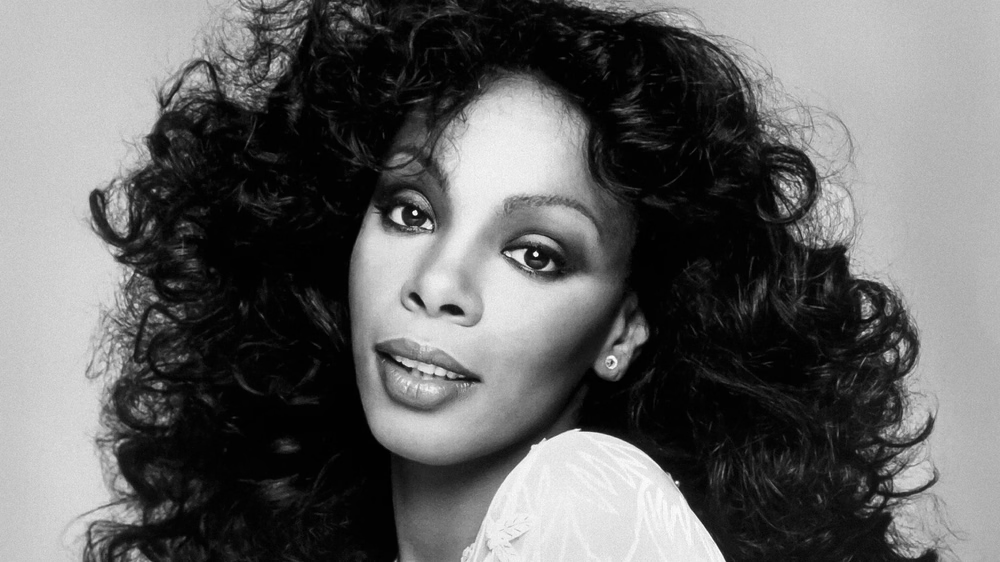
She grew up Donna Adrian Gaines in the Mission Hill neighborhood of Boston, the third of seven children, singing in the African Methodist Episcopal Church. She was ten when she stood up to replace a missing vocalist and the congregation felt something shift. By 1968, she had dropped out of high school, landed a role in the German production of Hair, and moved to Munich alone. She learned German. She performed in Godspell and Show Boat. She met Giorgio Moroder and Pete Bellotte at Musicland Studios, and a record label error turned Donna Sommer into Donna Summer. Those years as a European unknown were the price she paid while the industry figured out what to do with a voice that could do everything -- disco, rock, gospel, R&B, ballads, and the thrumming electronic pulse that Moroder was building in a Munich basement.
"I Feel Love" arrived in 1977 and announced that pop music had found a new pulse, built from a sequencer and Summer's voice floating above it -- a sound that had never existed before. There were no live drums, no traditional rhythm section. It hit number six in the US, number one in the UK. Brian Eno told David Byrne it would change club music for the next fifteen years.
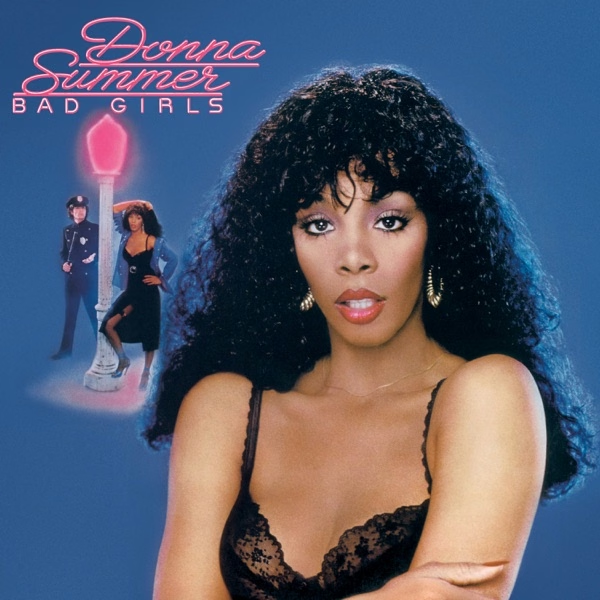
He undershot. She took Jimmy Webb's "MacArthur Park," a seven-minute orchestral oddity, and turned it into her first number one single. In 1979, she became the first female artist to score three number one singles in a calendar year. Her album Bad Girls sold two million copies in the US. She won two Grammys in consecutive years, including the first ever awarded for Best Female Rock Vocal Performance -- the first Black artist to win a Grammy in a rock category. Her song "Love Is in Control" appeared in Paul Thomas Anderson's Boogie Nights (1997), a film that used her sound to score the rise and fall of an era.
The industry tried to bury disco and took a swing at Summer in the process. She sued Casablanca for $10 million, walked away from the genre that made her, and spent the rest of her career proving she was never just a disco singer. She became a born-again Christian, won Grammys for inspirational performance, and watched "I Feel Love" get inducted into the National Recording Registry at the Library of Congress. She built the architecture of electronic dance music in a Munich studio with a German producer and a voice that could say everything -- and nothing -- and make both feel like gospel.
Donna Summer was profiled in the documentary, Love to Love You, Donna Summer, in 2023.