Carole King
1942 –
She walked into 1650 Broadway in Manhattan in the early 1960s, a teenage girl from Brooklyn who had already sold her first song at seventeen. The Brill Building was a songwriting factory, a building full of cubicles where teams churned out hits for the biggest acts in pop. Carole King and her husband Gerry Goffin were the most prolific team in the building, writing for the Drifters, the Shirelles, Aretha Franklin, and a hundred other acts that defined the sound of AM radio.
She wrote the melody and the bridge. Goffin wrote the words. Together they produced a catalog that most songwriters would trade their careers for.

"A natural woman
Do you believe in love at first sight"

-- from (You Make Me Feel Like) A Natural Woman

The cost of that success was the marriage itself. Goffin was unfaithful, struggling with his own demons, and the pressure of writing on a conveyor belt took its toll. Carole King left New York in 1968, moved to Laurel Canyon in Los Angeles, and started over. She formed a band, the City, and began singing her own songs -- something she had never done on record. The voice was not a polished instrument in the Brill Building sense. It was honest, breathy, a little raw, and that was exactly what the songs needed. She was no longer writing for someone else's voice. She was writing for her own.

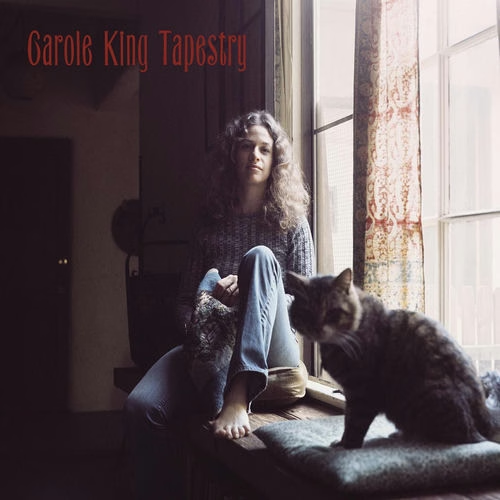
Tapestry is the one. Released in 1971, the album spent six straight years on the Billboard charts and won four Grammys. It Is So Hard to Say Goodbye, You've Got a Friend, and It's Too Late became standards that have never left the culture. The songs were personal in a way pop music had not been before -- not a character singing to an audience, but a woman telling you what she had been through. The album sold over twenty-five million copies and made Carole King a household name, not as a songwriter behind the scenes but as a performer in her own right. She proved that the person who writes the song is often the best person to sing it.

She kept writing, kept recording, kept performing into her seventies, but Tapestry is the monument. It sits in the Library of Congress. It is taught in songwriting classes. It is the album that every singer-songwriter since has had to measure themselves against. Carole King did not invent the confessional pop song. She simply wrote the best one, and then she wrote ten more just as good, and she sang them herself because by then she knew the voice that the songs needed was hers all along.

Carole King was profiled in the documentary, Carole King: Natural Woman, in 2016.
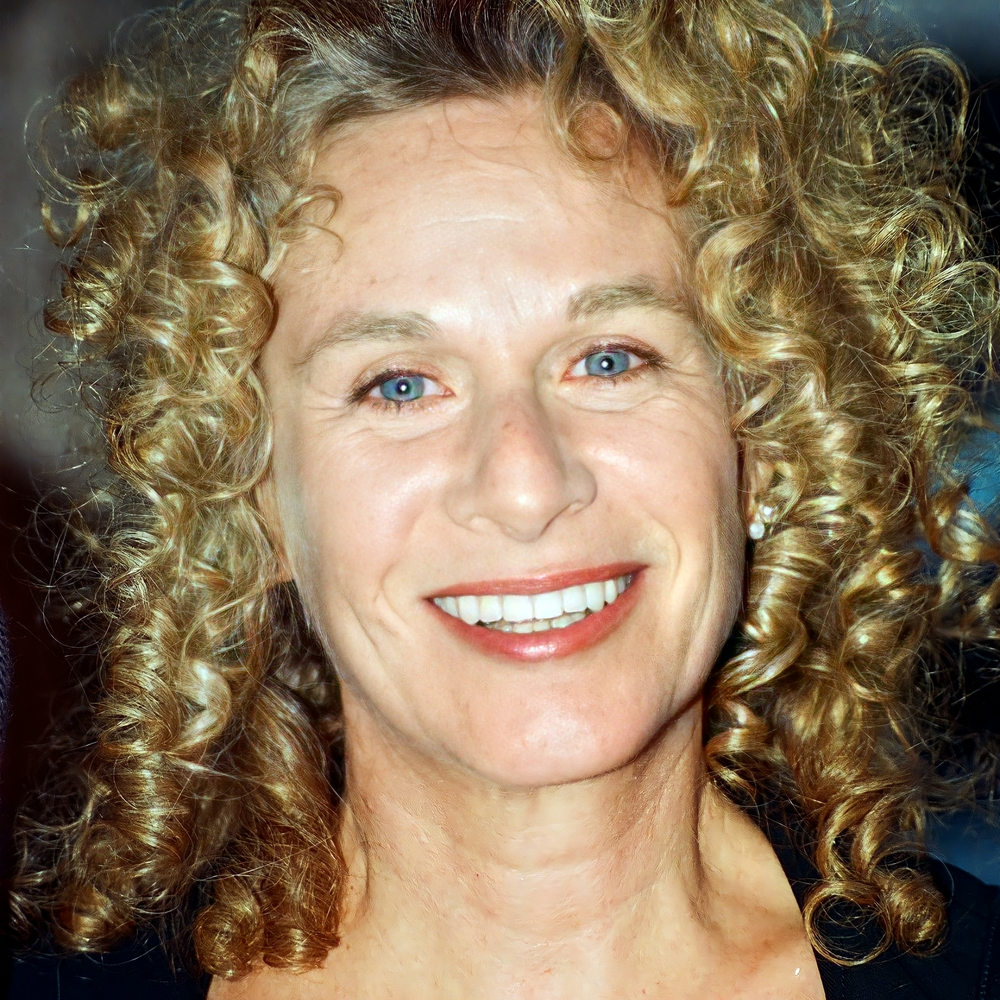
Image Credits

1,414 artist portraits across 5 genres (Rock, Jazz, Soul, Blues, Folk). 1,363 sourced from Wikipedia (Creative Commons / Public Domain), 50 from Deezer (promotional artwork).

Full attribution breakdown →

Carole King

1942 –
She walked into 1650 Broadway in Manhattan in the early 1960s, a teenage girl from Brooklyn who had already sold her first song at seventeen. The Brill Building was a songwriting factory, a building full of cubicles where teams churned out hits for the biggest acts in pop. Carole King and her husband Gerry Goffin were the most prolific team in the building, writing for the Drifters, the Shirelles, Aretha Franklin, and a hundred other acts that defined the sound of AM radio.
She wrote the melody and the bridge. Goffin wrote the words. Together they produced a catalog that most songwriters would trade their careers for.

"A natural woman
Do you believe in love at first sight"

-- from (You Make Me Feel Like) A Natural Woman

The cost of that success was the marriage itself. Goffin was unfaithful, struggling with his own demons, and the pressure of writing on a conveyor belt took its toll. Carole King left New York in 1968, moved to Laurel Canyon in Los Angeles, and started over. She formed a band, the City, and began singing her own songs -- something she had never done on record. The voice was not a polished instrument in the Brill Building sense. It was honest, breathy, a little raw, and that was exactly what the songs needed. She was no longer writing for someone else's voice. She was writing for her own.

Tapestry is the one. Released in 1971, the album spent six straight years on the Billboard charts and won four Grammys. It Is So Hard to Say Goodbye, You've Got a Friend, and It's Too Late became standards that have never left the culture. The songs were personal in a way pop music had not been before -- not a character singing to an audience, but a woman telling you what she had been through. The album sold over twenty-five million copies and made Carole King a household name, not as a songwriter behind the scenes but as a performer in her own right. She proved that the person who writes the song is often the best person to sing it.

She kept writing, kept recording, kept performing into her seventies, but Tapestry is the monument. It sits in the Library of Congress. It is taught in songwriting classes. It is the album that every singer-songwriter since has had to measure themselves against. Carole King did not invent the confessional pop song. She simply wrote the best one, and then she wrote ten more just as good, and she sang them herself because by then she knew the voice that the songs needed was hers all along.

Carole King was profiled in the documentary, Carole King: Natural Woman, in 2016.
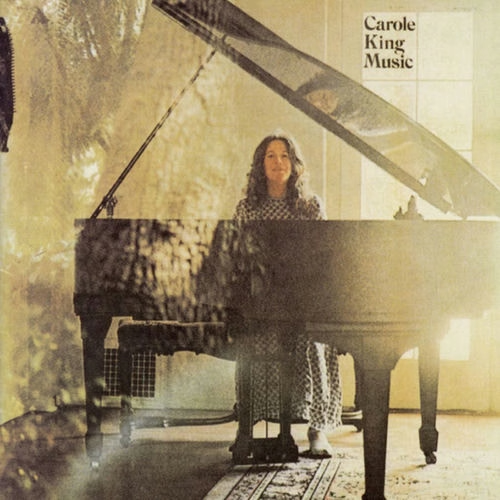
Music (1971) Music (1971)
Tapestry (1971) Tapestry (1971)
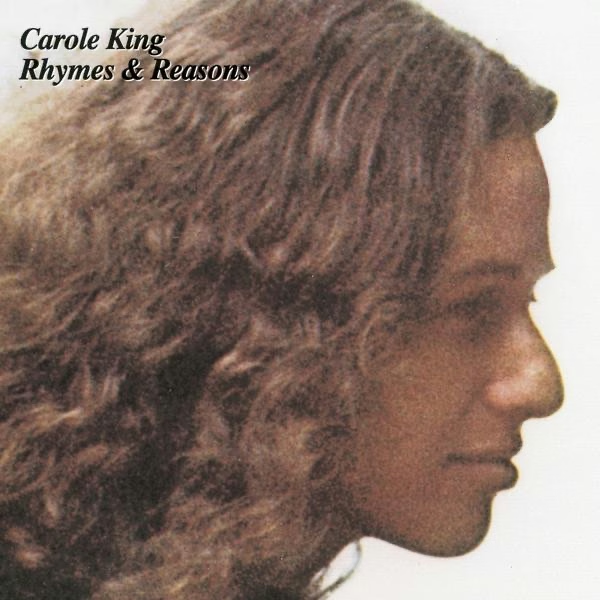
Rhymes & Reasons (1972) Rhymes & Reasons (1972)
Music (1971)
Tapestry (1971)
Rhymes & Reasons (1972)
singer-songwriterpopsoul
The Sunday Drop
One song. One story. Every Sunday.

No algorithms. No trending sections. Just a song someone loved and the story behind it. Delivered Sunday morning.

Free. No spam. Unsubscribe anytime.

Image Credits

1,414 artist portraits across 5 genres (Rock, Jazz, Soul, Blues, Folk). 1,363 sourced from Wikipedia (Creative Commons / Public Domain), 50 from Deezer (promotional artwork).

Full attribution breakdown →

0:00
0:00
The Sunday Drop One song. One story. Every Sunday.