"There is a rose in Spanish Harlem
A rose in black at Spanish Harlem"
-- from Spanish Harlem
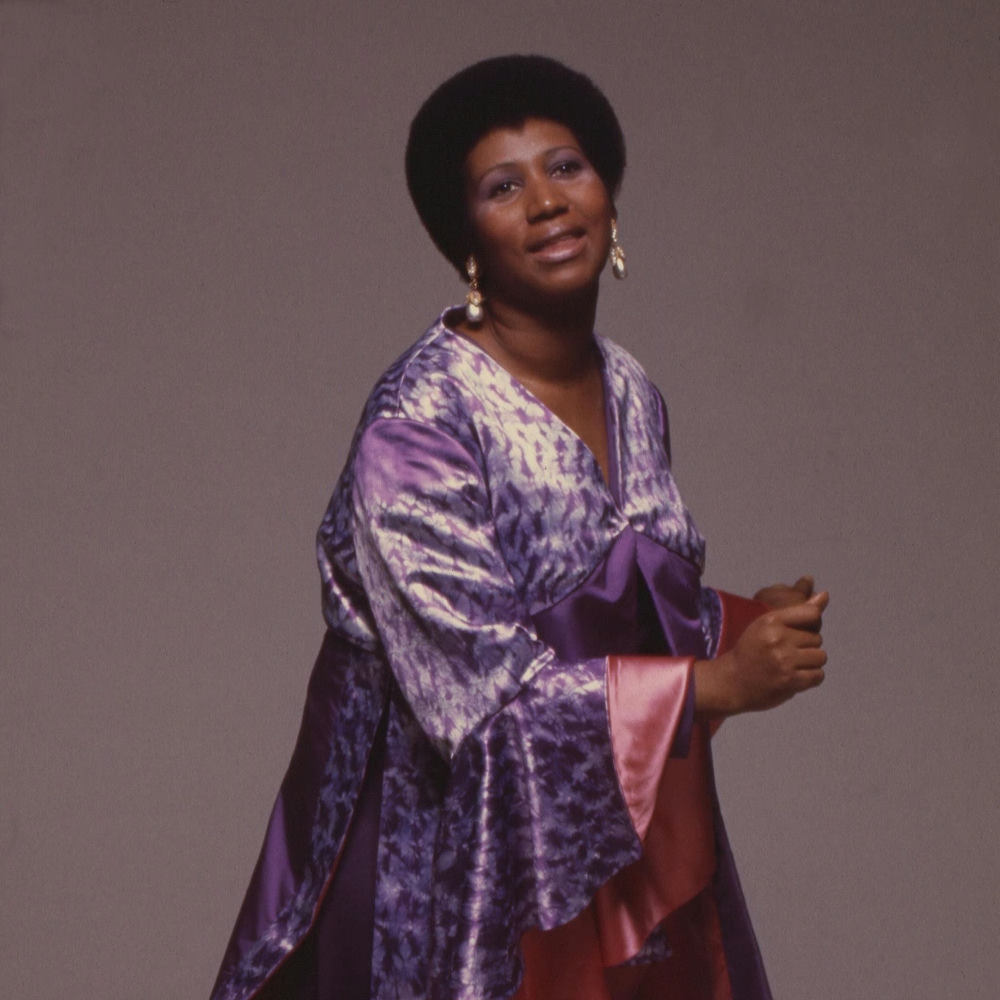
Aretha's father, the Reverend C.L. Franklin, was one of the most prominent Black preachers in America, and his church drew thousands. Young Aretha learned to sing in that Pentecostal fire -- testimony, call-and-response, the long build and the sudden release. She learned piano by ear, never formally trained, and by 18 she had already given birth twice. The first pregnancy was at twelve, by a family acquaintance -- a fact often misreported as sixteen or eighteen. The truth is harsher, and it shaped everything. She married Ted White at nineteen, a manager who controlled her career and her finances and, by many accounts, abused her. The tension between the control in her life and the freedom in her voice created the engine of her greatest work.
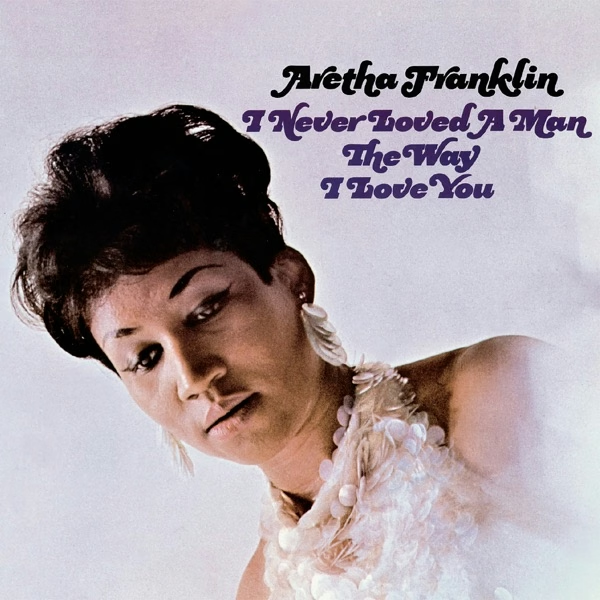
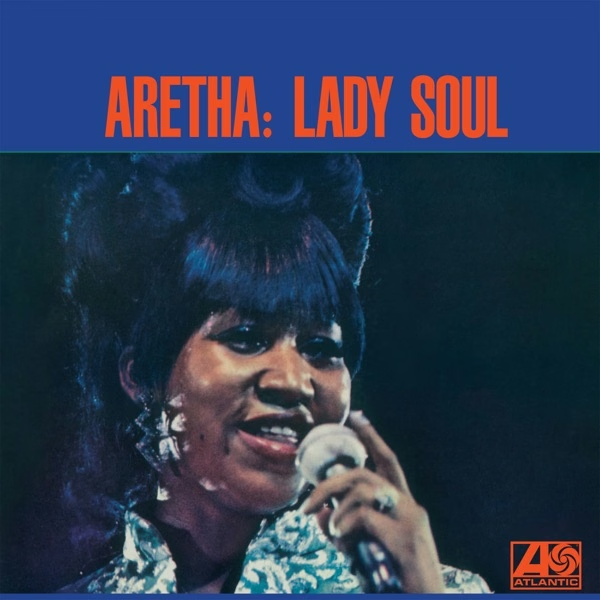
What she did with Otis Redding's "Respect" is not a cover. It is a transformation. Redding wrote it as a working man's plea -- "give me my propers when I get home." Aretha flipped it into a demand, a feminist anthem, a civil rights statement, and a horn arrangement that still sounds like a crowd entering a room. She added the "R-E-S-P-E-C-T" spelling because she wanted the listener to spell it out, to feel each letter land. The song spent two weeks at number one and became permanent. She followed it with "(You Make Me Feel Like) A Natural Woman," "Chain of Fools," "Think" -- a run of singles between 1967 and 1972 that redefined what a Black woman's voice could say on American radio.
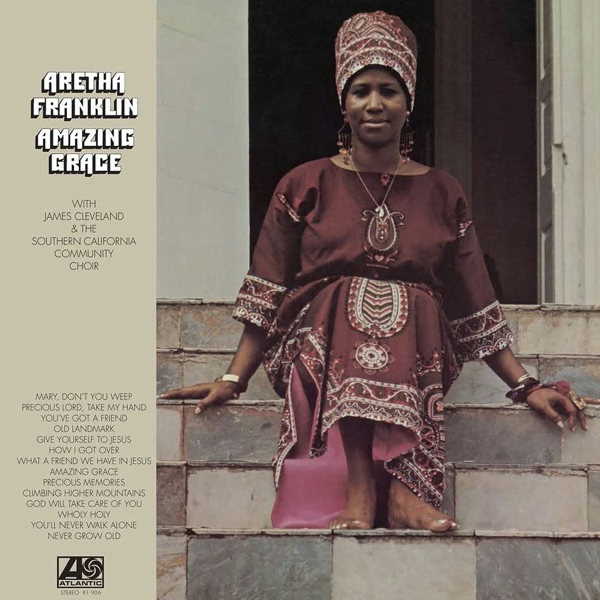
The voice was the thing. Always. It could do the Pentecostal growl and the silken high note in the same phrase. But what made Aretha Franklin Aretha Franklin was not technique alone -- it was the authority behind every syllable. She sang like she had already been through everything the song was describing. And she had. When she returned to gospel in 1972 with the live double album Amazing Grace, recorded at the New Temple Missionary Baptist Church in Los Angeles with Reverend James Cleveland and the Southern California Community Choir, she was not returning to a past self. She was showing you where the power had come from all along. The album became the best-selling gospel record of all time. The film of that recording, released in 2018, shows her eyes closed, swaying, completely at home. That was never a debt to the church. That was the foundation returning to the ground.
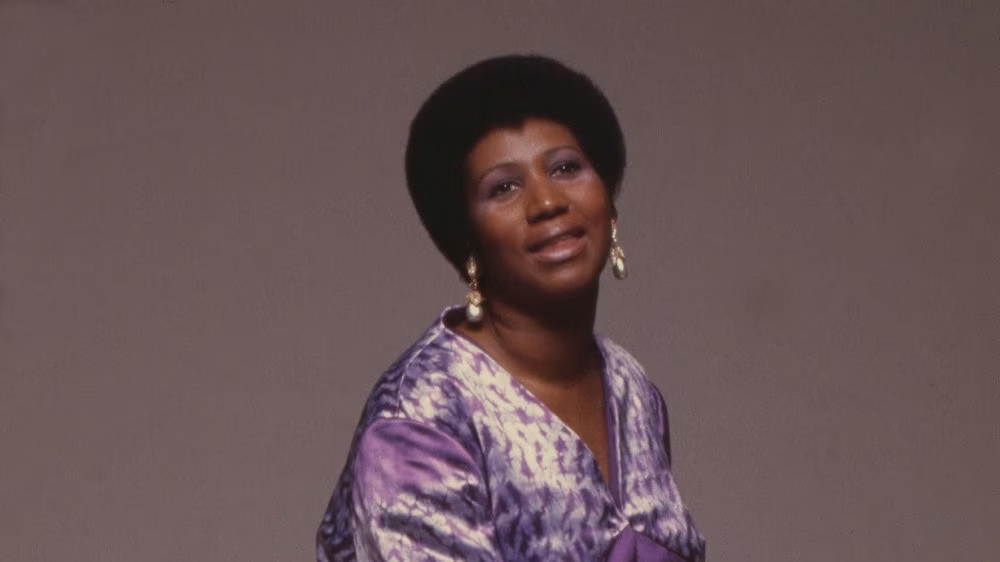
Aretha Franklin was profiled in the documentary, Amazing Grace, in 2018.