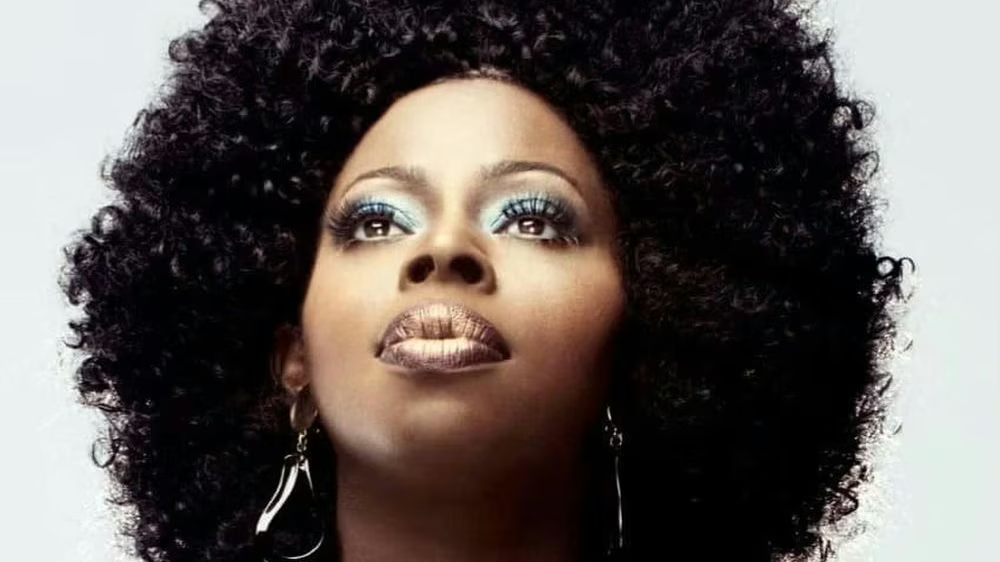
Angie Stone
1970 – 2025 (55)
She was born in Columbia, South Carolina, in 1970, grew up singing in the church, and by the time she was a teenager she knew the choir was not the end of the road. Angie Stone took the gospel training she received as a child and walked it into the secular world without leaving the spirit behind. She started as a member of the rap trio Sequence, one of the first female groups signed to Sugar Hill Records, and spent the 1980s learning how to write, produce, and command a stage that barely paid but taught her the fundamentals.
By the time she stepped out as a solo artist in 1999, she had already done the work that most artists spend a career avoiding.

The cost was the decade in between, and it was not a short one. Sequence had a hit with Funk You Up in 1979, but the industry did not know what to do with women who rapped and sang and produced their own material without a male handler. The group dissolved, and Stone spent the 1990s writing for other artists, singing background vocals on records she could have led, and raising a daughter alone. She married and divorced. She kept writing through every setback. She kept believing that the voice would find its place even when radio programmers told her neo-soul did not have a lane. When she signed with Arista and released Black Diamond in 1999, the album was not an arrival -- it was a statement that she had been ready all along, and the industry had taken too long to catch up.

No More Rain (In This Cloud) is the one. That song, built around a sample of Gladys Knight and the Pips' Neither One of Us, became the quiet storm anthem of the neo-soul movement. Stone's voice carried the weight of every relationship she had survived, every lesson she had paid for in full. The album went gold.
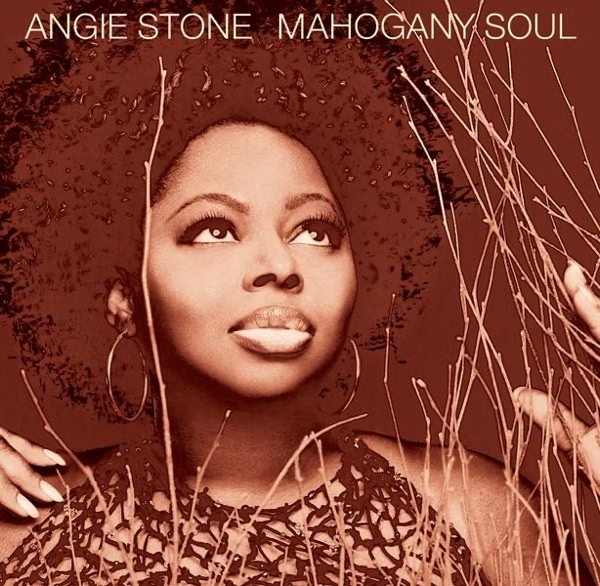
Mahogany Soul (2001)

She followed it with Mahogany Soul in 2001, which included Wish I Didn't Miss You, a track that sampled the O'Jays' Back Stabbers and proved that classic soul samples were not a crutch but a conversation between generations. She wrote for and with Raphael Saadiq, D'Angelo, and Musiq Soulchild, becoming a connective thread in the neo-soul scene that held the movement together.

She died in a car accident in March 2025 at fifty-four, and the music world stopped to reckon with what it had lost. Angie Stone was not the loudest voice in neo-soul. She was the grounding force, the one who reminded the genre that gospel was not something you left behind when you crossed over into secular music. The church was in her phrasing, in the way she held a note past where another singer would have let it go, in the patience of her delivery when the song asked for nothing but time. Seven solo albums, a Grammy nomination, and a legacy as the woman who took the choir out of the sanctuary and onto the radio without ever losing the hallelujah.

Angie Stone was profiled in the documentary, Angie Stone: A Life in Soul, in 2024.
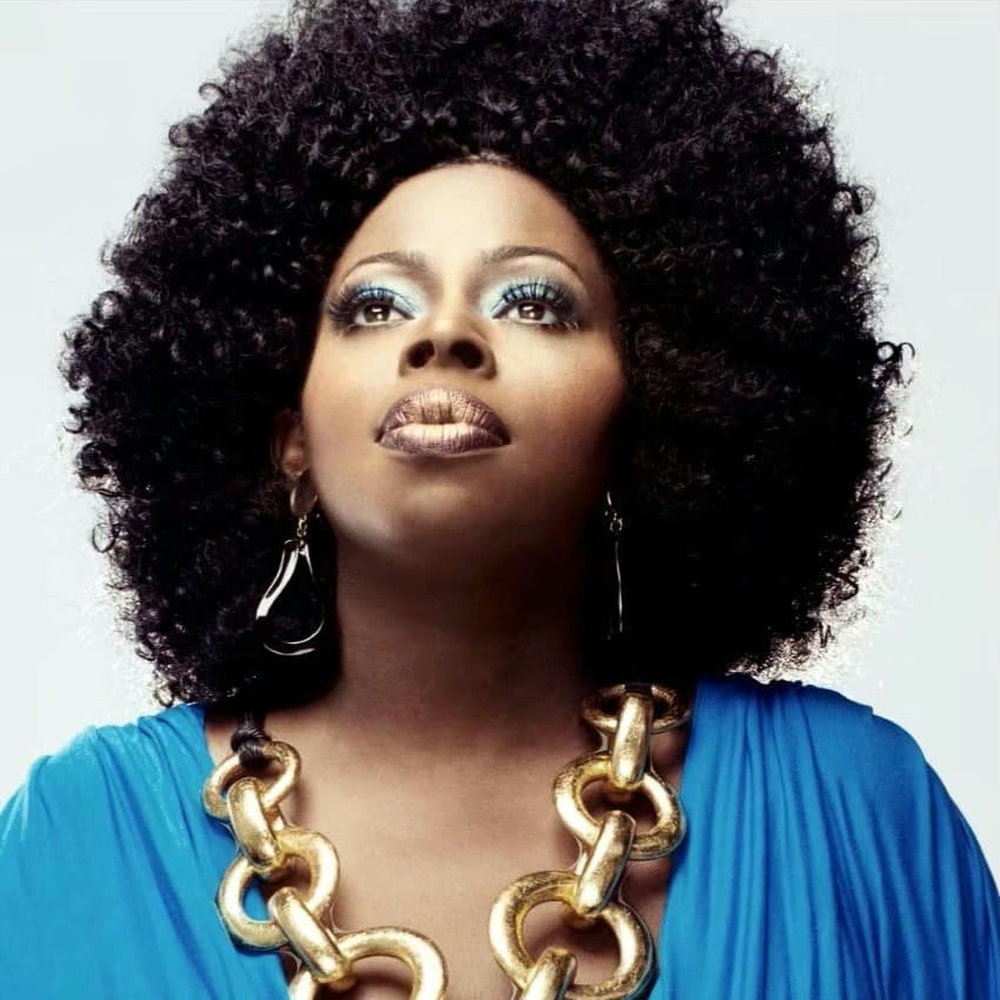
Image Credits

1,414 artist portraits across 5 genres (Rock, Jazz, Soul, Blues, Folk). 1,363 sourced from Wikipedia (Creative Commons / Public Domain), 50 from Deezer (promotional artwork).

Full attribution breakdown →

Angie Stone

1970 – 2025 (55)
She was born in Columbia, South Carolina, in 1970, grew up singing in the church, and by the time she was a teenager she knew the choir was not the end of the road. Angie Stone took the gospel training she received as a child and walked it into the secular world without leaving the spirit behind. She started as a member of the rap trio Sequence, one of the first female groups signed to Sugar Hill Records, and spent the 1980s learning how to write, produce, and command a stage that barely paid but taught her the fundamentals.
By the time she stepped out as a solo artist in 1999, she had already done the work that most artists spend a career avoiding.

The cost was the decade in between, and it was not a short one. Sequence had a hit with Funk You Up in 1979, but the industry did not know what to do with women who rapped and sang and produced their own material without a male handler. The group dissolved, and Stone spent the 1990s writing for other artists, singing background vocals on records she could have led, and raising a daughter alone. She married and divorced. She kept writing through every setback. She kept believing that the voice would find its place even when radio programmers told her neo-soul did not have a lane. When she signed with Arista and released Black Diamond in 1999, the album was not an arrival -- it was a statement that she had been ready all along, and the industry had taken too long to catch up.

No More Rain (In This Cloud) is the one. That song, built around a sample of Gladys Knight and the Pips' Neither One of Us, became the quiet storm anthem of the neo-soul movement. Stone's voice carried the weight of every relationship she had survived, every lesson she had paid for in full. The album went gold.

Mahogany Soul (2001)

She followed it with Mahogany Soul in 2001, which included Wish I Didn't Miss You, a track that sampled the O'Jays' Back Stabbers and proved that classic soul samples were not a crutch but a conversation between generations. She wrote for and with Raphael Saadiq, D'Angelo, and Musiq Soulchild, becoming a connective thread in the neo-soul scene that held the movement together.

She died in a car accident in March 2025 at fifty-four, and the music world stopped to reckon with what it had lost. Angie Stone was not the loudest voice in neo-soul. She was the grounding force, the one who reminded the genre that gospel was not something you left behind when you crossed over into secular music. The church was in her phrasing, in the way she held a note past where another singer would have let it go, in the patience of her delivery when the song asked for nothing but time. Seven solo albums, a Grammy nomination, and a legacy as the woman who took the choir out of the sanctuary and onto the radio without ever losing the hallelujah.

Angie Stone was profiled in the documentary, Angie Stone: A Life in Soul, in 2024.
Mahogany Soul (2001) Mahogany Soul (2001)
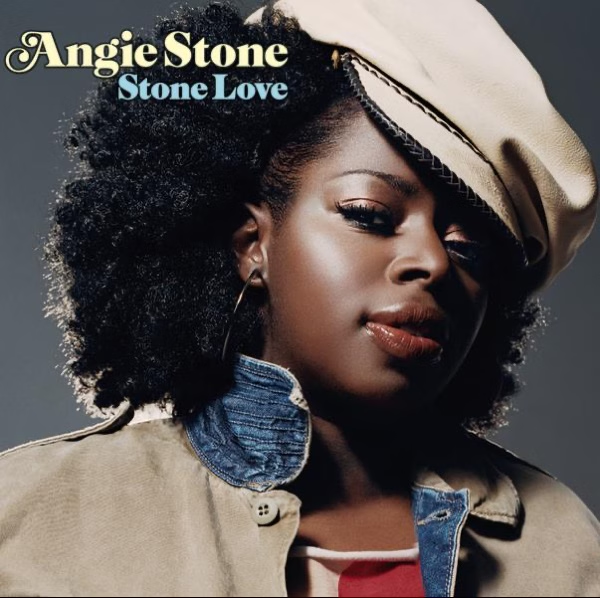
Stone Love (2004) Stone Love (2004)
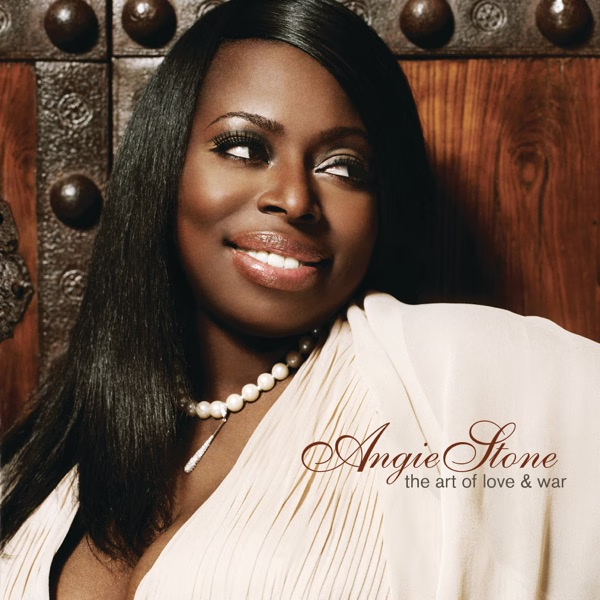
The Art of Love & War (2007) The Art of Love & War (2007)
Devox Featuring Angie B. Stone (1996)
Black Diamond (1999)
Mahogany Soul (2001)
Stone Love (2004)
The Art of Love & War (2007)
Unexpected (2009)
Rich Girl (2012)
Dream (2015)
Covered in Soul (2016)
Full Circle (2019)
Love Language (2023)
neo-soulr&bsoul
The Sunday Drop
One song. One story. Every Sunday.

No algorithms. No trending sections. Just a song someone loved and the story behind it. Delivered Sunday morning.

Free. No spam. Unsubscribe anytime.

Image Credits

1,414 artist portraits across 5 genres (Rock, Jazz, Soul, Blues, Folk). 1,363 sourced from Wikipedia (Creative Commons / Public Domain), 50 from Deezer (promotional artwork).

Full attribution breakdown →

0:00
0:00
The Sunday Drop One song. One story. Every Sunday.